Core Technology
From biological carbon source to gem-quality diamond — a seven-stage precision manufacturing process operating at 5.5 GPa and 1,450°C.
HPHT is the established industrial method for producing gem-quality laboratory-grown diamonds. Our process replicates the natural conditions of diamond formation — extreme pressure and temperature — within a controlled manufacturing environment.
The HPHT method produces diamonds with the same optical, physical, and chemical properties as natural diamonds. The key differentiator in memorial diamond production is the carbon source: rather than generic carbon feedstock, we use carbon extracted and purified from biological materials submitted by partners and end customers.
5.5 GPa
Synthesis Pressure
1,450°C
Growth Temperature
~60 Days
Growth Cycle
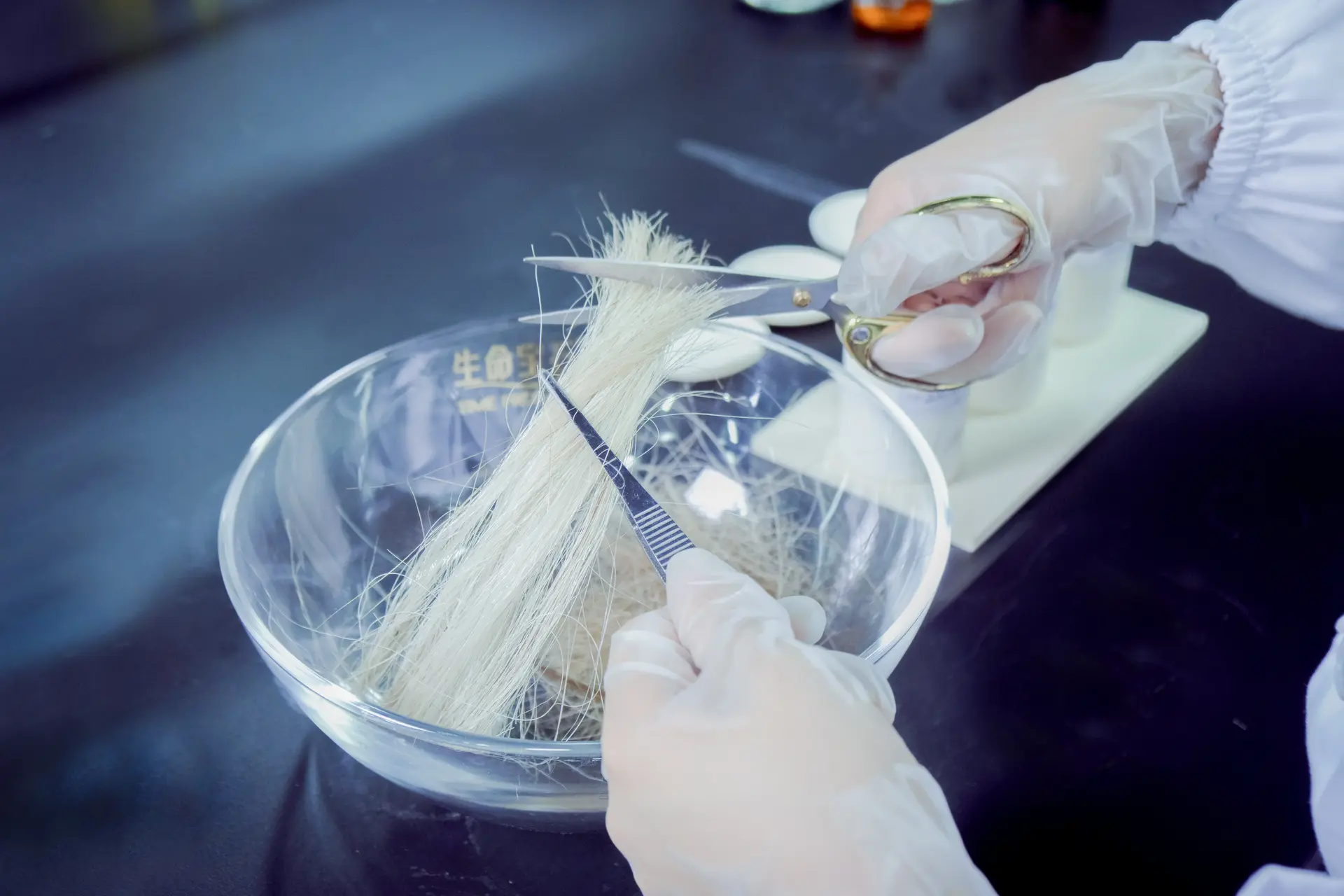
Carbon-bearing biological materials are received, catalogued, and assessed for carbon content and sample viability.
Human Hair
Minimum 0.3g. Keratin-based carbon extraction with high yield.
Pet Fur
All mammalian keratin. Compatible with cat, dog, horse, and other species.
Cremated Ashes
Carbon-rich residue. Requires extended purification stage.
Flowers & Plants
Botanical cellulose and lignin carbon. Seasonal viability assessment.
Sample Receipt & Documentation
Unique batch ID assigned. Chain-of-custody log initiated. Photo documentation of sealed sample container.
Carbon Content Assessment
Preliminary spectroscopic analysis to estimate available carbon mass and identify potential contaminants.
Sample Viability Confirmation
Go/no-go decision based on carbon yield estimate. Partner notified of any material constraints.
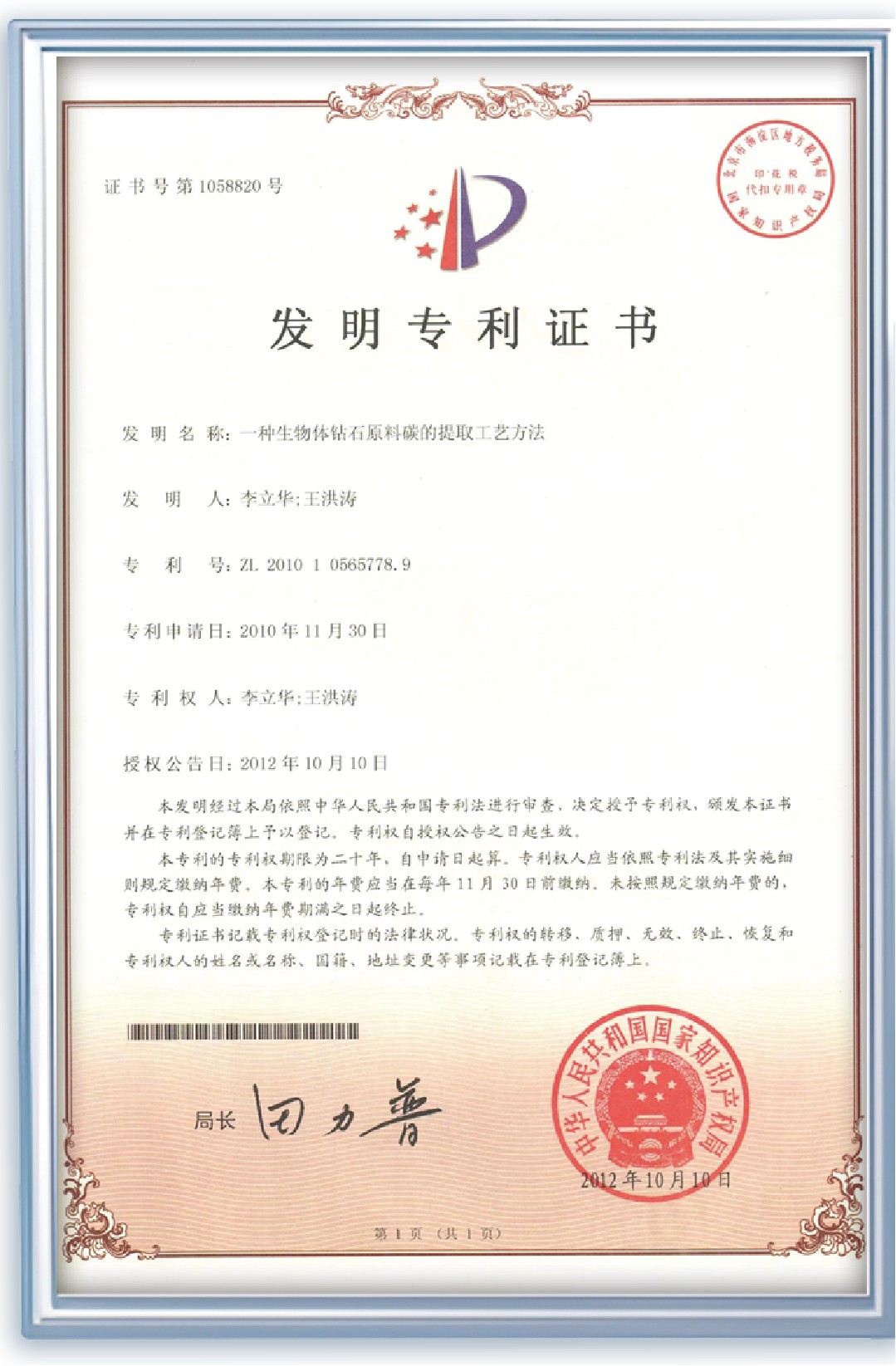
The proprietary stage that determines diamond quality. Our 2012 national invention patent covers the complete bio-carbon-to-diamond purification pipeline.
Biological materials undergo multi-phase processing to liberate and isolate carbon content. This stage removes organic binders, moisture, and non-carbon biological compounds through controlled thermal and chemical decomposition.
The extracted carbon fraction undergoes rigorous purification to achieve 99.95%+ purity — the threshold required for successful diamond synthesis. This is the most critical quality-determining stage of the entire pipeline.
Purified amorphous carbon is converted into crystalline graphite — the direct precursor material for diamond synthesis. This structural transformation is essential because diamond growth requires an ordered carbon lattice as the starting material.
Process Temperature
2,000 – 3,000°C under vacuum or inert gas atmosphere
Duration
12 – 48 hours depending on carbon mass and source material
Structural Outcome
Hexagonal graphite crystal structure with layered atomic arrangement
Quality Checkpoint
X-ray diffraction confirmation of crystalline graphite phase
Structural Precondition
Diamond is a cubic crystal of carbon. Graphitization creates the ordered hexagonal precursor that restructures into diamond under HPHT conditions.
Growth Kinetics
Graphite-to-diamond conversion is faster and more controllable than amorphous-carbon-to-diamond, enabling the ~60-day cycle.
Quality Impact
Incomplete graphitization leads to inclusions, color defects, and structural weakness in the final diamond.
The core synthesis stage. Graphite is transformed into diamond through sustained high-pressure, high-temperature conditions in a synthesis chamber.
The synthesis chamber is pressurized to 5.0 – 6.0 GPa (approximately 55,000 atmospheres) using a belt-type or cubic multi-anvil press.
Equivalent to the pressure at ~180 km depth in Earth's mantle
Temperature is elevated to 1,350 – 1,600°C, creating a thermal gradient across the growth cell that drives carbon transport from graphite to the diamond seed.
Precision ±5°C maintained throughout the growth cycle
The growth cycle runs continuously for 40 – 70 days depending on target carat weight. Larger diamonds require extended growth periods.
Growth rate: ~0.01 – 0.03 mm/day depending on conditions
Graphite Source
Purified bio-carbon graphite positioned at the high-temperature end
Catalyst Alloy
Fe-Ni-Co molten metal solvent that dissolves and transports carbon
Diamond Seed
Small natural or synthetic diamond crystal that initiates growth
Thermal Gradient
Temperature differential drives carbon from source to seed
After synthesis, the rough diamond undergoes cutting and polishing to achieve the desired shape and optical quality. Our processing protocol prioritizes maximum carat retention while optimizing for clarity and brilliance.
Rough Assessment
Microscopic examination to identify optimal cut plan. Inclusions mapped and documented.
Precision Cutting
Laser or mechanical sawing followed by bruting to create the girdle and basic shape.
Polishing & Faceting
Multi-stage polishing on scaif to achieve the final facet arrangement and surface luster.
Every finished diamond is graded and documented before delivery. Our certification system provides partners with the documentation needed to present a complete, verifiable product to their customers.
4C Grading
Carat weight, color grade, clarity grade, and cut quality assessed per industry standards.
CCIC Traceability Code
National traceability QR code assigned. Full chain-of-custody documentation available via scan.
Gemological Certificate
Chinese Gemological certification standard. IGI certificate available as optional add-on.
Production Video
Key stage video documentation compiled for partner and end-customer access.
Our core carbon extraction and purification technology is protected by a national invention patent granted in 2012. This patent covers the complete pipeline from biological material intake through purified carbon production, establishing a proprietary foundation that differentiates our manufacturing process from generic lab-grown diamond producers.
Patent Type
National Invention Patent
Granted
2012
R&D Origin
Since 2003
Discuss OEM manufacturing, white-label supply, or custom technology requirements with our partnership team.