The memorial diamond industry has grown from a handful of specialized laboratories in the early 2000s to a global network of manufacturers, resellers, and white-label providers. For a pet cremation service, veterinary clinic, memorial brand, or funeral home evaluating manufacturing partners, the challenge is not finding a supplier — it is identifying the right supplier for your business model, quality standards, and customer expectations.
This article presents eight criteria that every B2B buyer should assess before committing to a memorial diamond manufacturing partnership. These criteria are derived from our experience supplying partners worldwide and from the common failure modes we have observed in the industry.
TL;DR — Quick Summary
Selecting the right memorial diamond manufacturing partner requires evaluating eight critical criteria: production technology, timeline reliability, certification quality, traceability systems, pricing transparency, customer support, scale compatibility, and scientific credibility. This framework helps B2B buyers avoid opaque suppliers and build partnerships that protect their brand reputation.
1. Production Technology and Capability
Not all memorial diamonds are created equal. The manufacturing technology — HPHT press specifications, carbon extraction methods, cutting equipment — directly determines the quality, consistency, and cost of the final product.
Key questions to ask:
- What diamond growth method is used? HPHT is standard for memorial diamonds; CVD is viable but slower and less cost-effective at memorial scales. Avoid suppliers who cannot articulate their technology clearly.
- How is carbon extracted from the source material? Thermal decomposition + chemical purification is standard. Ask about extraction efficiency and contamination control. Proprietary or patented extraction technology is a positive signal.
- What is the laboratory's annual production capacity? Small operations (<100 carats/year) may struggle with scaling. Large operations (>1,000 carats/year) typically have better process control and lower unit costs.
- What color grades are consistently achievable? Does the supplier maintain consistent color grades within a predictable range? BioGem Lab standard production yields E–H near-colorless only.
Red flag: A supplier who claims "proprietary secret technology" but cannot explain basic process parameters (temperature, pressure, growth duration, extraction yield) is either uninformed or dishonest. Memorial diamond manufacturing is well-documented science — there are no true "trade secrets" at the process level, only execution excellence.
2. Production Timeline and Reliability
Timeline directly impacts customer satisfaction and cash flow. A partner selling memorial diamonds to grieving families or pet owners cannot afford to miss promised delivery dates.
Industry timeline benchmarks:
| Supplier Type | Typical Timeline | Reliability |
|---|---|---|
| Large established labs | 7–12 months | High (established workflow) |
| Mid-size specialized labs | 45–75 days | Moderate–High |
| Small boutique operations | 3–6 months | Variable (resource-constrained) |
| Resellers/aggregators | Variable (dependent on upstream) | Low–Moderate |
Ask potential suppliers for their average and maximum production times over the last 12 months. Averages can hide delays — maximum times reveal worst-case scenarios.

Figure 1: Carbon extraction workflow — the stage that most commonly causes timeline delays if process control is inadequate.
3. Certification and Documentation Quality
Certification is the primary trust mechanism in the memorial diamond industry. Customers need proof that their diamond is genuine, that it originated from their submitted material, and that it meets gemological standards.
Evaluate suppliers on three documentation layers:
- Gemological grading certificate. The gold standard is IGI (International Gemological Institute) or GIA (Gemological Institute of America) for international markets. Domestic markets may accept national gemological certificates. Verify that the certificate includes the 4Cs, measurements, and a photograph of the actual diamond.
- Carbon source traceability. This is unique to memorial diamonds. How does the supplier prove the diamond's carbon came from the submitted sample? Look for batch tracking systems, photographic documentation, and third-party verification (e.g., CCIC traceability codes in China).
- Production documentation. Does the supplier provide production milestone updates? Can they share synthesis parameters, extraction yield data, or quality control records upon request?
Best practice: Request a sample certificate from any supplier you are evaluating. Examine the detail level, photographic quality, and security features (holograms, QR codes, online verification). A certificate that looks like a Microsoft Word printout is a warning sign.
4. Traceability and Chain of Custody
Memorial diamonds carry emotional value that far exceeds their material worth. A customer who discovers that their "memorial diamond" was actually synthesized from generic graphite — or worse, that their sample was lost and substituted — will not merely request a refund. They will pursue legal action, publicize the failure, and damage your brand permanently.
Chain of custody requirements:
- Sample receipt verification. Photograph of the sample in its original packaging, with timestamp and tracking ID.
- Batch tracking. Unique barcode or QR code assigned to each sample, following it through every processing stage.
- Split sample protocol. A portion of the original material is retained as a reference sample, enabling verification if questions arise.
- Third-party audit capability. Can an independent auditor verify the chain of custody? Some suppliers work with national inspection agencies (e.g., CCIC in China) for periodic audits.
5. Pricing Transparency and Structure
Memorial diamond pricing varies widely across the industry. Understanding a supplier's pricing model is essential for margin planning and competitive positioning.
Pricing structure elements to evaluate:
- Base price per carat. Is pricing linear with carat weight, or are there economies of scale? Most memorial diamond suppliers use tiered pricing: 0.5 ct, 0.50 ct, 1.00 ct, and custom sizes.
- Color and cut premiums. What is the color grade consistency across batches, and does the supplier publish their nitrogen control methodology? Does a round brilliant cut carry a premium over a princess or emerald cut?
- Certification fees. Are gemological certificates included, or billed separately? Third-party certificates (IGI, GIA) typically add $100–$300 per diamond.
- Volume discounts. What are the breakpoints for reduced per-unit pricing? Are discounts automatic or negotiated case-by-case?
- Shipping and insurance. Who bears responsibility during transit? Is shipping included in the quoted price or added separately?
Avoid suppliers who cannot provide a clear, itemized price sheet. Ambiguous pricing — "it depends on the diamond" or "we'll quote after synthesis" — creates unpredictability that makes business planning impossible.
6. White-Label and Branding Capability
If you are a B2B partner (not an end consumer), white-label capability is critical. Your customers should see your brand, not the manufacturer's.
White-label evaluation checklist:
- Packaging customization. Can the supplier use your branded boxes, certificate sleeves, and documentation? Or do they ship in generic packaging with their own logo?
- Direct-to-customer shipping. Can the supplier ship directly to your end customer under your brand name? This eliminates double-shipping costs and handling delays.
- Marketing support. Does the supplier provide product photography, technical specifications, and process documentation you can use in your own marketing?
- Co-branding options. If full white-label is not available, does the supplier offer co-branded documentation or certificate sleeves that feature your company alongside the official third-party gemological certificate?
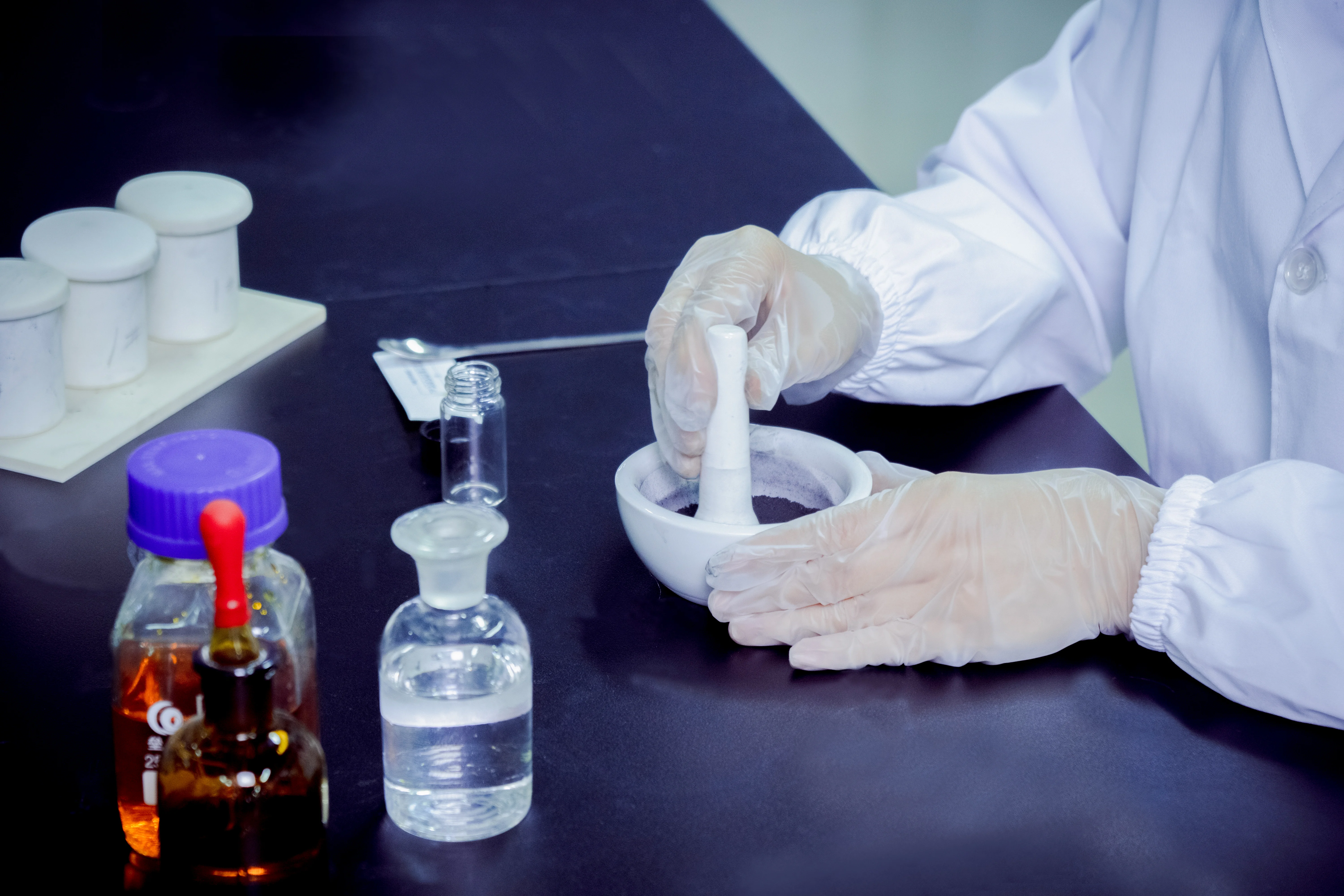
Figure 2: Sample preparation stage — proper grinding and homogenization directly impacts diamond growth uniformity and final clarity.
7. Regulatory Compliance and Geographic Risk
Memorial diamonds involve shipping biological materials across international borders. Regulatory compliance is not optional — it is a legal requirement that varies by origin, destination, and material type.
Compliance factors to verify:
- Export/import permits. Does the supplier hold necessary permits for shipping carbon samples and finished diamonds internationally? For US-bound shipments from China, this typically involves customs declarations for synthetic diamonds (non-DG, no USDA permit required for hair/fur, but proper documentation is essential).
- Laboratory certifications. Is the manufacturing facility certified under ISO standards? Does it hold any national laboratory accreditations?
- Material restrictions. Does the supplier handle all material types (hair, fur, nails, botanical), or do they refuse certain materials due to regulatory complexity? Some suppliers avoid botanical material due to seasonal viability concerns.
- Insurance and liability. What happens if a sample is lost, contaminated, or damaged during processing? Is the supplier insured? What is their liability cap?
8. Customer Service and Partner Support
The memorial diamond sales cycle is long (customers take days or weeks to decide), emotionally charged, and technically complex. Your customers will ask questions you cannot answer without manufacturer support. The quality of that support directly impacts your close rate and customer satisfaction.
Support evaluation criteria:
- Response time. How quickly does the supplier respond to partner inquiries during business hours? Same-day response is standard; next-day is acceptable; longer than 48 hours is a problem.
- Technical depth. Can the supplier's support staff explain HPHT parameters, carbon extraction chemistry, and gemological grading in detail? Or do they deflect technical questions to "the lab team" with no follow-up?
- Production visibility. Can you (and your customer, if desired) track order status in real time? Is there a portal, or do you rely on email updates?
- Issue resolution. What is the process if a customer is dissatisfied with color, clarity, or cut? Does the supplier offer remake, credit, or refund policies?
- Training resources. Does the supplier provide onboarding training, FAQ documents, and sales scripts for your team?
Scoring Matrix: How to Weight the Criteria
Not all criteria carry equal importance for every business. A veterinary clinic prioritizing pet fur diamonds may weight traceability and timeline higher than a jewelry manufacturer prioritizing cut quality and certification brand. Here is a suggested weighting framework:
| Criterion | Pet Cremation | Veterinary | Memorial Brand | Jewelry Mfg |
|---|---|---|---|---|
| Production Technology | 20% | 20% | 25% | 30% |
| Timeline & Reliability | 20% | 20% | 20% | 15% |
| Certification Quality | 15% | 15% | 20% | 20% |
| Traceability | 20% | 20% | 15% | 10% |
| Pricing Transparency | 10% | 10% | 10% | 10% |
| White-Label Capability | 10% | 10% | 5% | 5% |
| Regulatory Compliance | 3% | 3% | 3% | 5% |
| Partner Support | 2% | 2% | 2% | 5% |
Conclusion
Choosing a memorial diamond supplier is a high-stakes decision. The wrong partner can damage your reputation, alienate grieving customers, and create legal liability. The right partner becomes an invisible extension of your business — handling complex manufacturing while you maintain the customer relationship that matters most.
Use the eight criteria above as a structured evaluation framework. Do not rely on a supplier's marketing claims; request documentation, sample certificates, and references from existing partners. A legitimate memorial diamond manufacturer will welcome scrutiny — it is how they differentiate from resellers and low-quality operators.
BioGem Lab provides full documentation, sample certificates, and partner references to qualified B2B applicants. Our manufacturing facility in Luoyang, China operates under patent-backed carbon extraction technology (ZL 201010565778.9), with CCIC traceability certification, IGI grading capability, and white-label fulfillment infrastructure serving partners worldwide.
Download: Memorial Diamond Supplier Evaluation Checklist
A printable PDF checklist covering all eight criteria with specific questions to ask during supplier evaluation calls. Request via email for immediate delivery.
Request Checklist →Frequently Asked Questions
What certifications should a memorial diamond supplier have?
Essential: ISO 17025 laboratory accreditation, HPHT synthesis equipment verification, independent gemological grading (GIA/IGI), and a documented chain of custody system. Optional but valuable: patented carbon extraction technology and third-party quality audits.
How do I verify a supplier actually uses my sample?
Demand CCIC or equivalent third-party chain of custody documentation with batch numbers. The supplier should provide photos/videos of your specific sample at intake, during processing, and the finished diamond with matching serial numbers.
What's the difference between OEM and white-label services?
OEM means the supplier manufactures diamonds with your branding—you handle customer relationships. White-label adds a complete front-end package: branded packaging, certificate sleeves, documentation, and customer portal. BioGem Lab offers both tiers.
Why does BioGem Lab not accept ashes for diamond synthesis?
Cremation temperatures of 700–1000°C oxidize organic carbon to CO₂, leaving only inorganic hydroxyapatite. The carbon required for diamond synthesis is destroyed during standard cremation. Hair and fur samples must be collected before cremation.
Li Lihua — Chief Scientist
Patent inventor ZL 201010565778.9. View profile →
Ready to Partner with BioGem Lab?
Learn about our white-label and OEM manufacturing programs for memorial diamond businesses.
Explore Partnership →