Interested in offering botanical carbon diamonds? Explore white-label partnership opportunities.
Case Study · Botanical Carbon
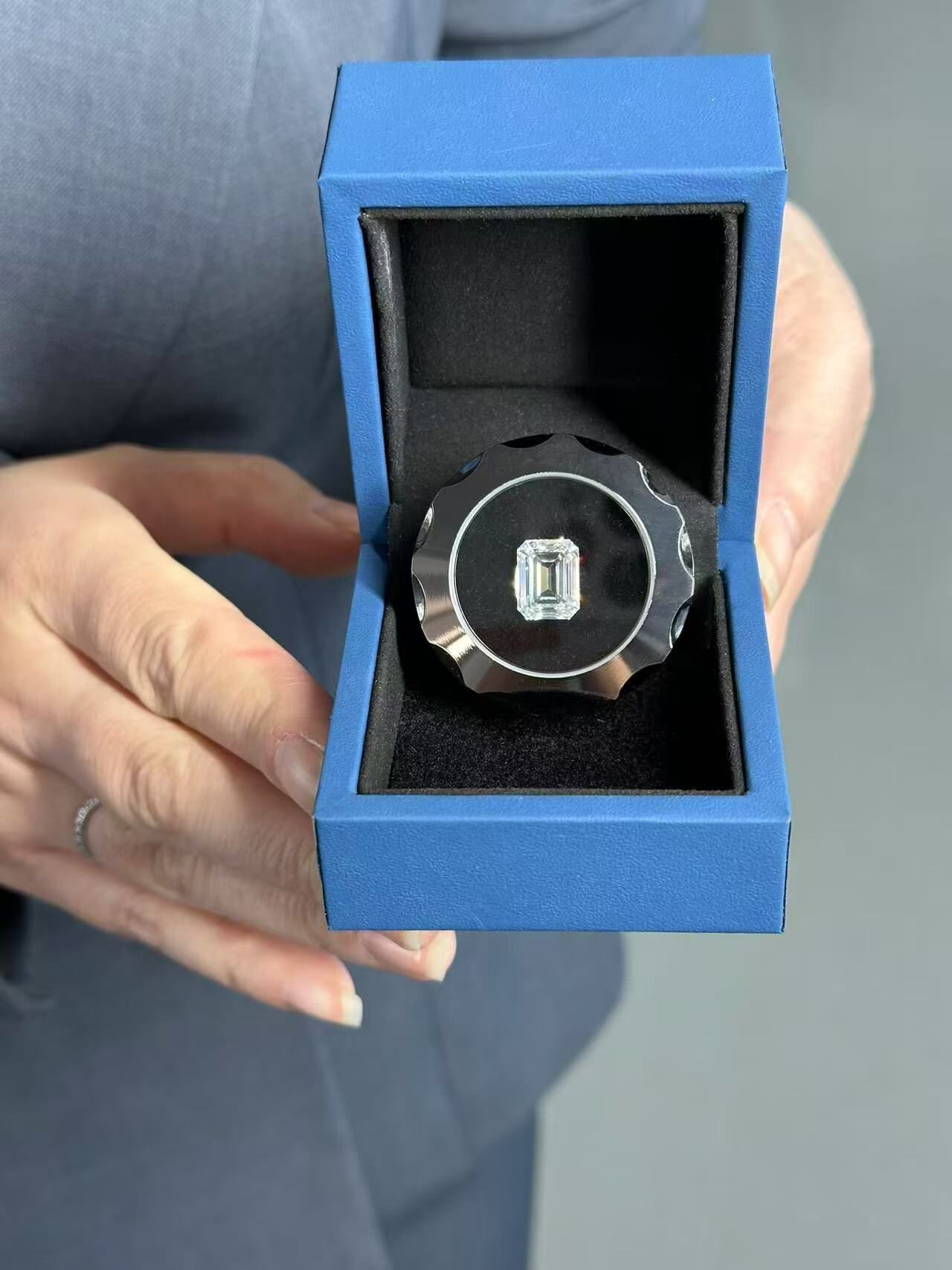
A 3-carat memorial diamond grown from the carbon of a 50-year-old Luoyang Red peony. The first botanical carbon diamond in history — covered by 30+ national and international media outlets.
3ct
Gem Weight
50yr
Peony Age
30+
Media Outlets
10d
Min. Extraction
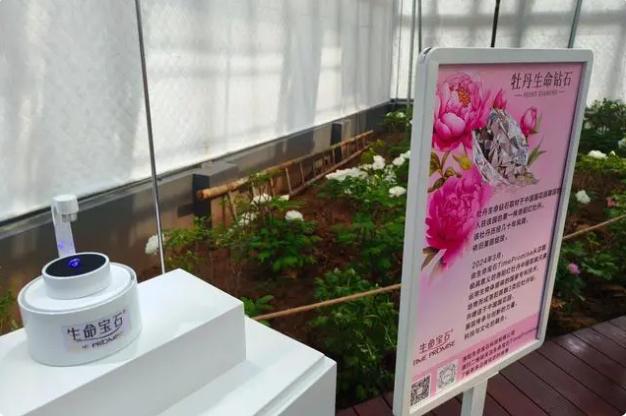
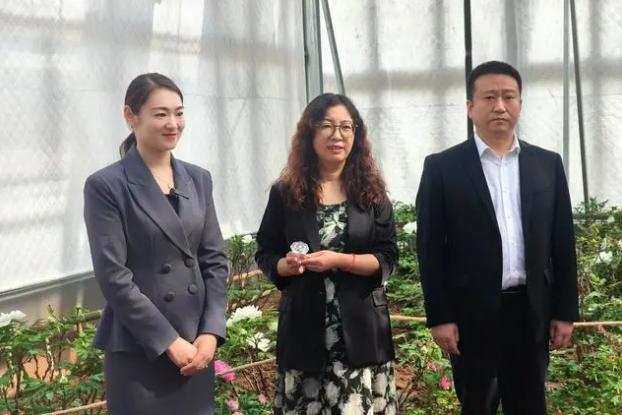
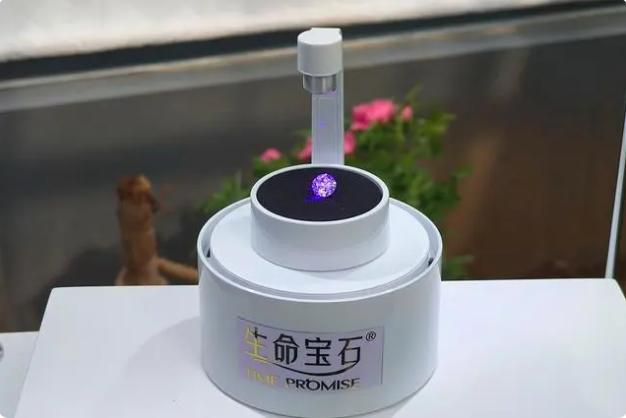
On April 17, 2024, the world's first peony carbon diamond was unveiled at the opening ceremony of the Jinxiu Pavilion in Luoyang's China National Flower Garden. The diamond was grown from the carbon extracted from the garden's very first Luoyang Red peony — a tree planted over 50 years ago when the garden was founded.
This 3-carat, colorless diamond, valued at approximately ¥300,000 RMB, represents a breakthrough in botanical carbon extraction. Unlike traditional memorial diamonds that use animal hair or ashes, the Peony Diamond proved that plant-based carbon can be purified and crystallized into gem-quality diamonds through HPHT synthesis.
The project was a collaboration between BioGem Lab and the China National Flower Garden. The diamond was donated to the garden as a permanent exhibit, symbolizing the fusion of natural beauty, cultural heritage, and modern materials science.

Carbon Source
Luoyang Red peony (50+ years)
Location
China National Flower Garden, Luoyang
Unveiling
April 17, 2024
Mass Production
April 23, 2024
A seven-stage pipeline that transforms botanical carbon into a gem-quality memorial diamond — proven at industrial scale.
The petals, stamens, and leaves of the 50-year-old Luoyang Red peony were carefully selected and harvested. This particular peony was the first tree planted in the China National Flower Garden, giving it exceptional cultural significance.
Fresh peony flowers undergo controlled dehydration and precision grinding. The organic material is reduced to fine particles, preparing it for the carbonization stage.
Using our patented bio-carbon extraction technology, the organic material is converted into graphite powder with purity exceeding 99.9%. The entire process is recorded on video for traceability.
The purified graphite is placed in a six-anvil press and subjected to 5.5 GPa pressure and 1,450°C temperature. Over approximately 60 days, the carbon atoms crystallize into a diamond lattice structure.
A proprietary cutting technique inspired by peony petals creates additional facets. When light hits the diamond, it sparkles like a blooming peony — the signature "Peony Cut."
The finished diamond is certified by CCIC (China Certification & Inspection Group) with full traceability. A dedicated溯源mini-program allows anyone to verify the diamond's origin and production history.
The entire extraction process can be completed in as little as 10 days, with the full HPHT growth cycle averaging 60 days — the fastest in the industry.
Six days after the 3-carat museum diamond was unveiled, BioGem Lab announced the mass production of the "Shennüzuo" (神女作) series on April 23, 2024. Named after the Tang Dynasty poet Xu Ning's famous line describing Luoyang peonies — "It seems the work of a goddess from the Luo River, a thousand charming forms breaking through the morning glow."
The commercial line features two products: a 0.3ct Peony Diamond with 18K gold bracelet and a 0.5ct Peony Diamond with 18K gold necklace. Both use the same Luoyang Red peony carbon source and identical HPHT process as the original 3-carat specimen.
The rapid transition from a single museum-grade piece to a scalable consumer product line demonstrated the industrial feasibility of botanical carbon diamonds — a milestone that proved bio-carbon extraction could move beyond one-off experiments into repeatable manufacturing.
The Peony Diamond story was picked up by state media, national portals, fashion publications, and international outlets — reaching audiences across China, Hong Kong, and the global Chinese diaspora.
State Media
National Portals
International
Fashion & Lifestyle
Economic & Industry
Local Henan / Luoyang
#1 Trending on Baidu Hot Search
On the day of unveiling, the topic "World's First Diamond Made from Peony Unveiled" (全球首颗用牡丹制成钻石亮相) reached the #1 position on Baidu's Hot Search, sparking nationwide discussion about the new definition of diamonds and the fusion of technology with traditional culture.
The Luoyang Red peony is no ordinary flower. Legend traces it to the Tang Dynasty, when Empress Wu Zetian commanded all flowers to bloom in winter. Every flower obeyed — except the peony. Enraged, the Empress ordered the peonies burned and thrown into the ravines of Luoyang's Mang Mountain.
Yet from the ashes, the peonies rose again — nourished by the soil and water of Luoyang. This resilience earned the Luoyang Red its name: "Jiaogu Mudan" (焦骨牡丹), the Charred-Bone Peony. It became a symbol of unbreakable spirit — refusing to bow, thriving after destruction, turning adversity into beauty.
The Peony Diamond carries this legacy. By transforming the flower's carbon into an eternal diamond, the project doesn't just preserve botanical material — it immortalizes the cultural meaning of resilience, pride, and rebirth. A flower that refused to kneel to an empress becomes a gem that refuses to fade with time.
"疑是洛川神女作,千娇万态破朝霞。"
— Tang Dynasty poet Xu Ning, describing the Luoyang peony. The "Shennüzuo" series takes its name from this poem.
This case study is more than a cultural milestone. It validates the technical and commercial infrastructure that BioGem Lab offers to white-label partners worldwide.
The Peony Diamond proved that our carbon extraction technology works not just on animal hair and ashes, but on any biological material — plants, flowers, feathers, and more. This opens entirely new product categories for partners.
From a single 3-carat museum piece to a mass-produced consumer line in six days. This demonstrated that botanical carbon diamonds aren't laboratory curiosities — they're manufacturable at scale with consistent quality.
The project generated coverage across 30+ outlets including state media, fashion press, and international platforms. For partners, this proves that memorial diamonds with a compelling story can command significant organic media attention.
Real production records from our laboratory. Each case demonstrates a unique carbon source and application of memorial diamond technology.
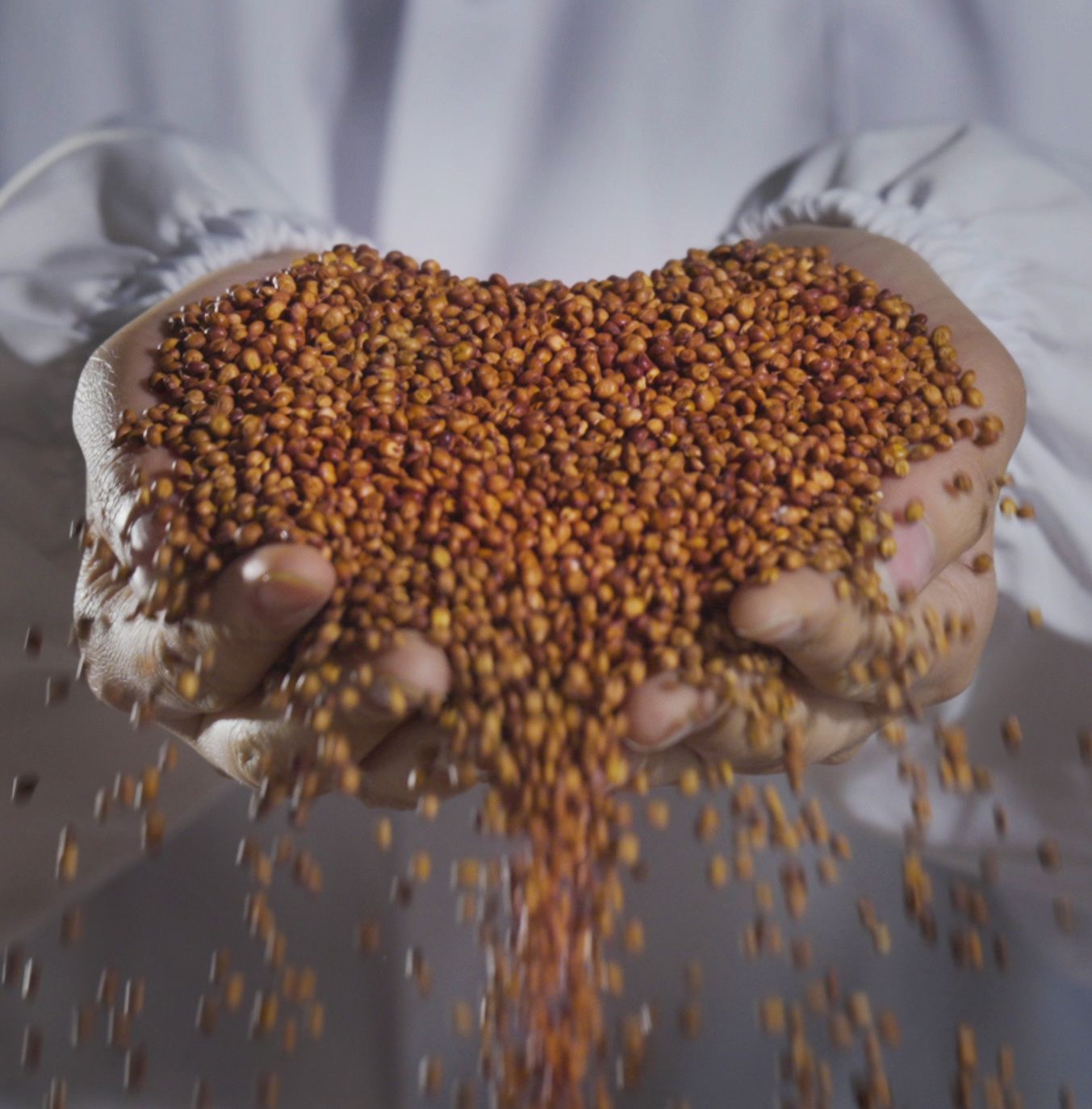
512 heritage commemorative diamonds from red sorghum grain carbon.
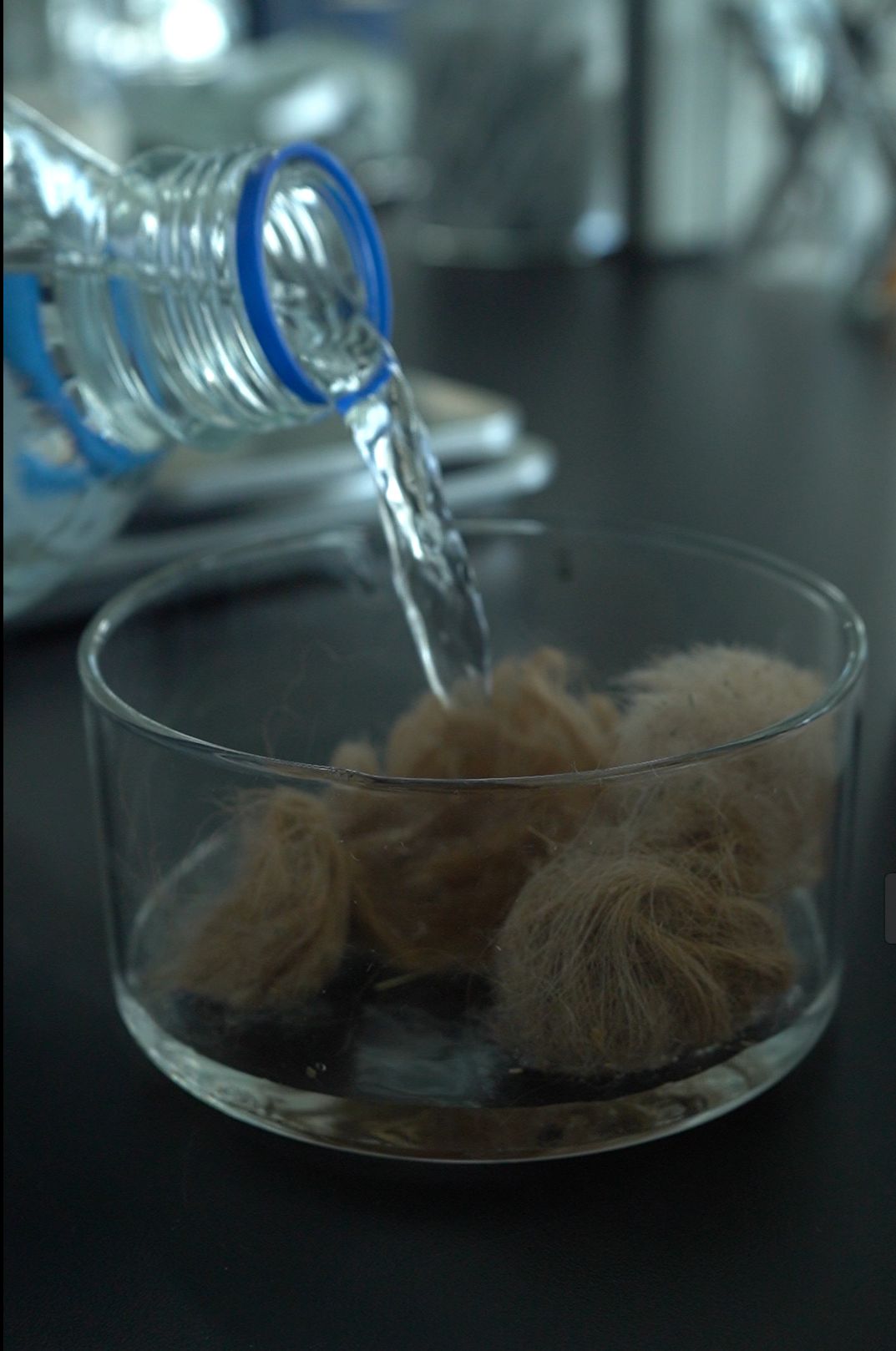
Specialized plant fiber carbon extraction for unique botanical sources.
Ancestral memorial diamonds for overseas Chinese community in Malaysia.
Cultural preservation from Inner Mongolian camel wool into commemorative diamonds.
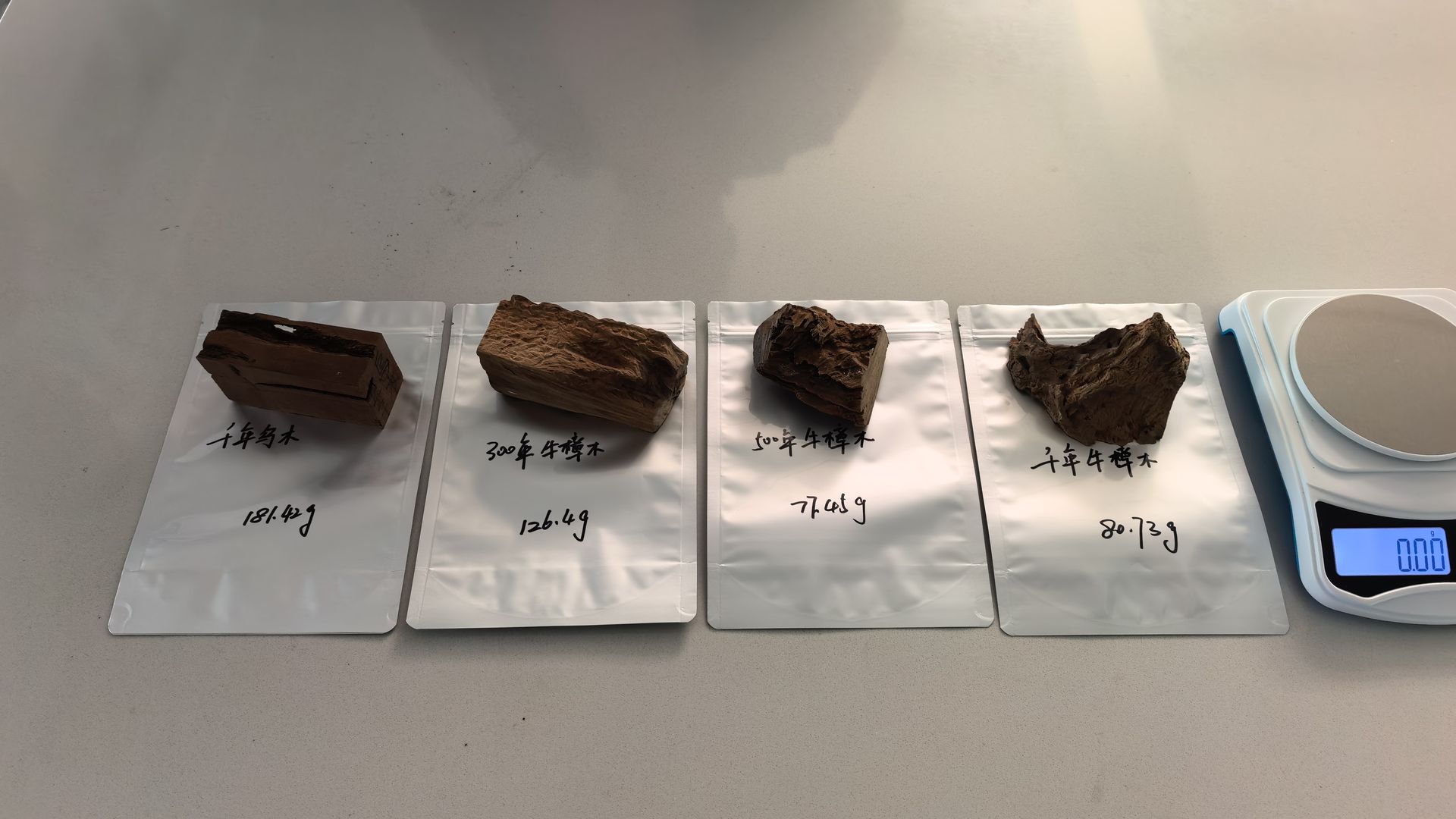
120-year-old camphor wood chest transformed into a generational heirloom diamond.
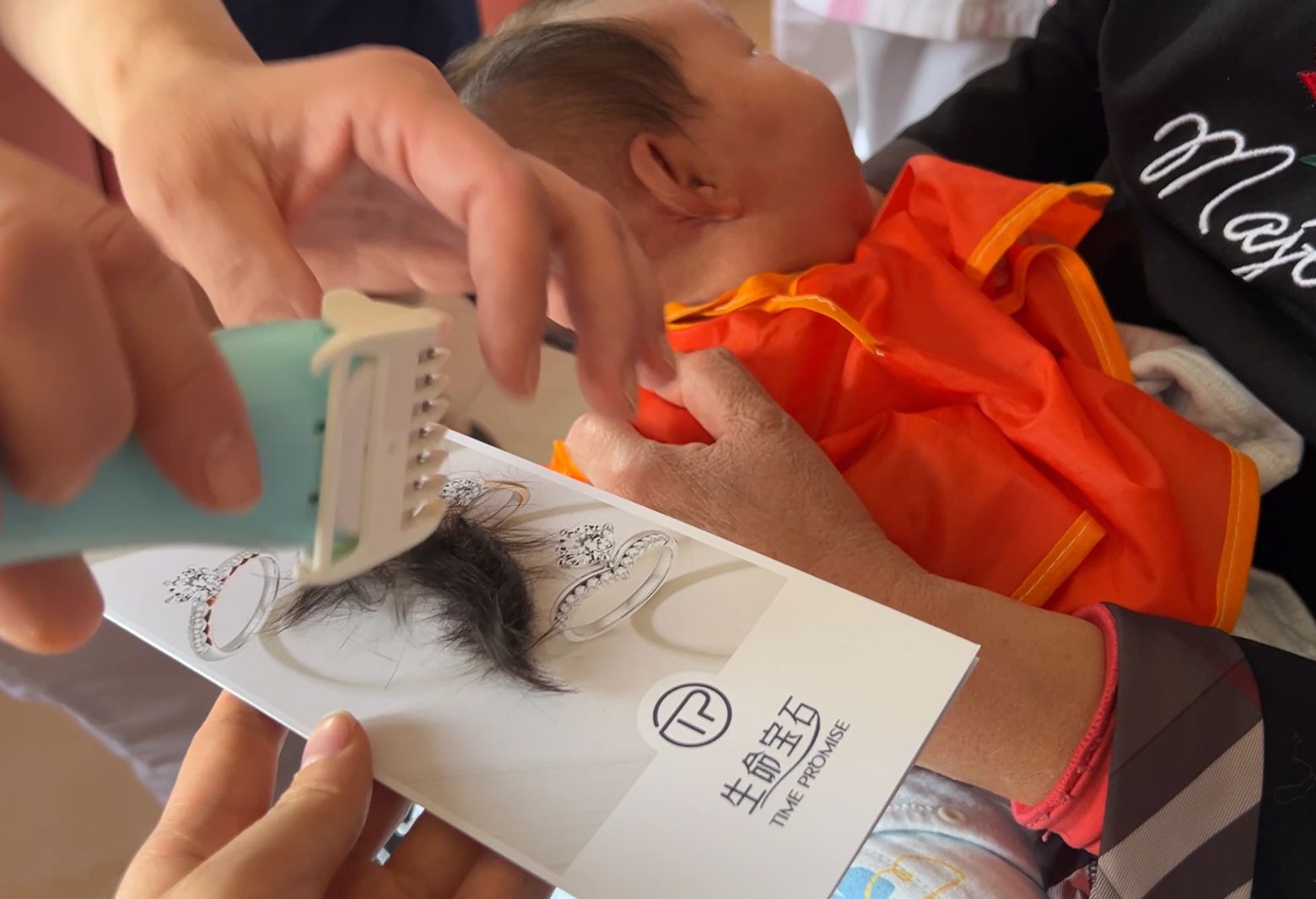
First hair keepsake transformed into a memorial diamond for new parents.
500-year-old banyan tree leaves transformed into community heritage diamonds.
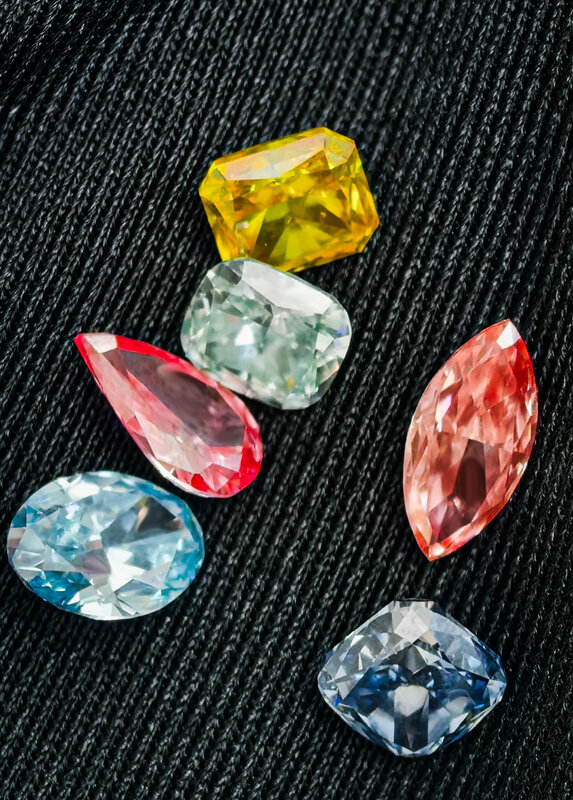
The Peony Diamond is just one application of our bio-carbon extraction technology. Whether you're serving pet owners, families, or botanical enthusiasts — we can white-label memorial diamonds from any carbon source under your brand.