The U.S. pet cremation market reached $47.7 million in 2025 and is projected to grow to $90.4 million by 2032. Yet most cremation providers operate on thin margins: a standard private cremation averages $200–$400, with limited upsell opportunities beyond urns and paw-print keepsakes. Memorial diamonds represent a fundamentally different revenue tier — one that transforms a transactional service into a lasting client relationship with margins typically unavailable in traditional pet aftercare.
TL;DR — Quick Summary
The U.S. pet cremation market is growing but operates on thin margins. Memorial diamonds offer cremation providers a fundamentally different revenue tier — transforming a one-time transactional service into a lasting client relationship with margins that no urn or paw print can match. The implementation requires zero inventory and zero upfront investment through a white-label partnership, making it accessible even for small and mid-size cremation businesses.
The Revenue Gap in Pet Aftercare
Pet cremation pricing has remained relatively static for a decade. Competition from mobile cremation units and budget providers has compressed margins at the low end. Premium providers differentiate through service quality, but the core offering — cremation itself — has a natural ceiling. Customers pay once, grieve, and rarely return until another pet passes.
Memorial diamonds change this equation structurally. A memorial diamond, produced through HPHT synthesis from purified bio-carbon, represents a fundamentally different product tier for cremation providers. The cremation provider's cost under a white-label partnership is significantly below market retail, creating margin multiples that no urn, paw print, or memorial candle can match. Contact us for detailed wholesale pricing.
Revenue Comparison: Standard Upsells vs. Memorial Diamonds
| Product | Retail Price | Provider Cost | Margin |
|---|---|---|---|
| Ceramic Urn | $85–$150 | $35–$60 | $50–$90 |
| Paw Print Keepsake | $40–$75 | $12–$25 | $28–$50 |
| Memorial Candle Set | $30–$55 | $10–$18 | $20–$37 |
| 0.5ct Memorial Diamond | Premium tier | Wholesale quote on request | Significantly higher |
| 1.0ct Memorial Diamond | Premium tier | Wholesale quote on request | Significantly higher |
*Pricing reflects North American white-label partnership tiers. Actual retail pricing set by partner. Contact us for wholesale structure.
Why Pet Owners Choose Memorial Diamonds
Demand is not theoretical. The human memorial diamond market has validated the concept for over a decade: consumers will pay a premium to transform hair or fur into a tangible, permanent keepsake. The pet segment follows the same psychological pattern with one key distinction — pet owners often grieve as intensely as they would for a family member, and they have fewer established ritual outlets.
Cremation produces ashes. Ashes are poured into urns, scattered, or buried. For many owners, this feels insufficient. A memorial diamond offers something fundamentally different: permanence, beauty, and daily presence. It can be set in a pendant worn daily, stored in a display case, or passed to children. Unlike an urn that sits on a shelf, a diamond integrates into life.
Permanence
Diamond is the hardest known natural material. A memorial diamond lasts geologic time scales.
Tangibility
A diamond can be held, worn, and displayed. It transforms grief into a physical object of beauty.
Emotional Value
Pet owners report memorial diamonds provide a sense of continued connection unavailable with traditional keepsakes.
From the cremation provider's perspective, this demand means one critical thing: the sale is not pushy. When presented as an option in the aftercare package, memorial diamonds sell themselves to the subset of clients seeking something beyond standard cremation. The provider's role is informational, not persuasive.
Implementation: Zero Inventory, Zero Risk
The most common objection from cremation providers is operational complexity. "We don't have laboratory equipment." "We don't have gemologists." "We don't want to hold inventory." All valid — and all irrelevant under a proper white-label structure.
A white-label memorial diamond partnership operates on a simple workflow: the cremation provider collects a small hair sample (approximately 6 grams for a 1-carat diamond), documents the client order under their own branding, and forwards the sample to the manufacturing laboratory. The laboratory handles carbon extraction, graphitization, HPHT synthesis, cutting, certification, and shipping. The finished diamond arrives at the provider's facility in branded packaging — ready for client handoff.
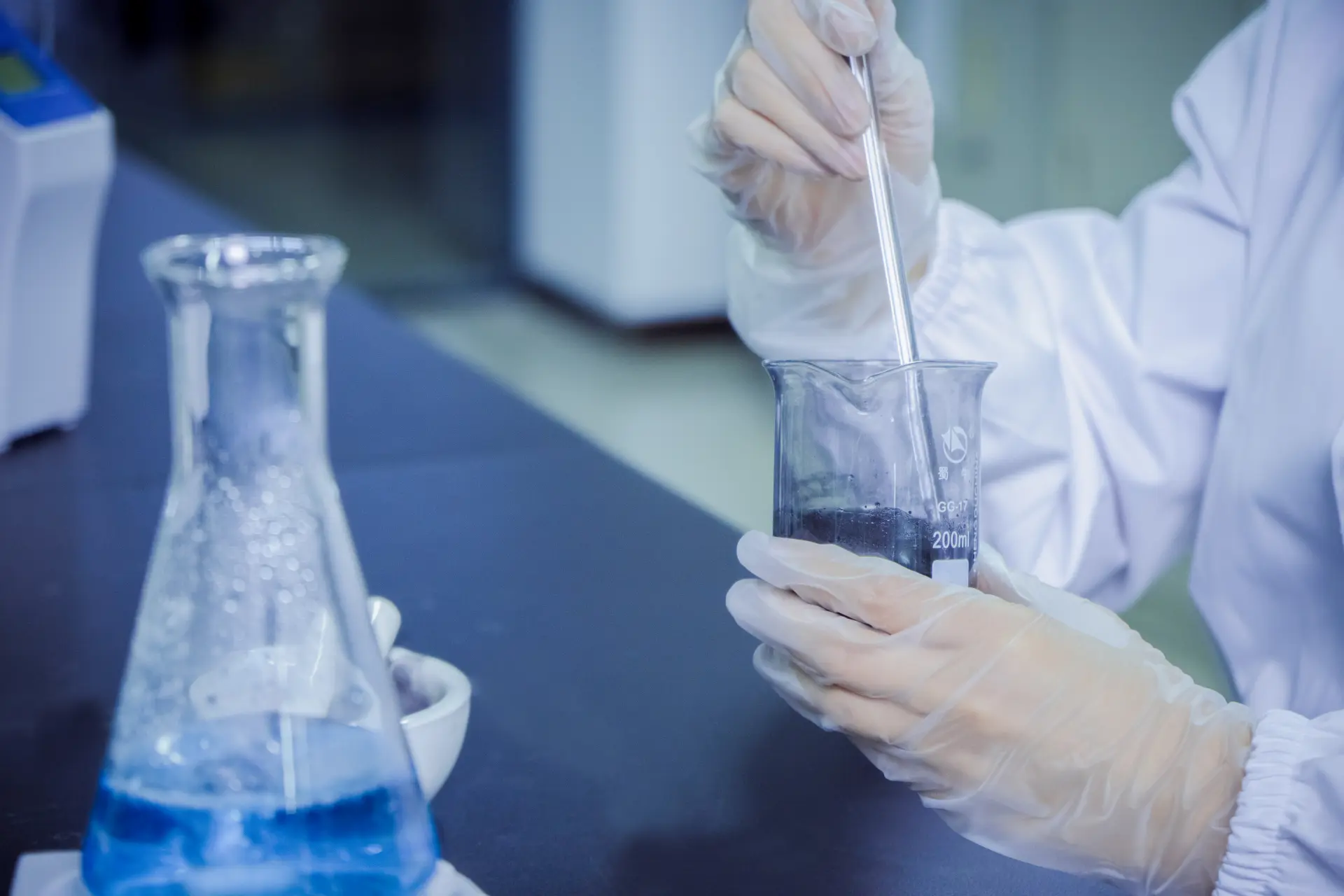
Carbon purification in process. The cremation provider never handles synthesis equipment — the laboratory manages all technical operations.
What the Provider Actually Does
Sample Collection
Collect approximately 6 grams of pet hair at the time of cremation arrangement. Store in a sealed container provided by the manufacturing partner.
Client Order Documentation
Record client preferences: diamond size, color, cut, and setting requirements. All documentation uses the provider's branded templates.
Sample Forwarding
Ship the sample to the manufacturing laboratory with the order documentation. Standard courier services suffice — samples are non-hazardous biological material.
Delivery & Handoff
Receive the finished diamond, certificate, and traceability documentation in ~60 days. Present to the client in your branded packaging.
No equipment investment. No laboratory staff. No inventory carrying costs. The provider's capital expenditure is zero. The only requirement is a small adjustment to the cremation arrangement process — adding a memorial diamond option to the aftercare menu.
Financial Model: What the Numbers Look Like
Revenue impact depends on volume and attachment rate. A mid-size cremation facility processing 500 pets annually can achieve meaningful incremental income with modest uptake. The key metric is attachment rate: the percentage of cremation clients who opt for a memorial diamond.
Annual Revenue Projection: 500-Cremation Facility
Conservative (3% uptake)
15 diamonds/year
Average 0.5ct
Contact us for margin details
Moderate (8% uptake)
40 diamonds/year
Average 0.5ct
Contact us for margin details
Strong (15% uptake)
75 diamonds/year
Mixed sizes
Contact us for margin details
*Projections assume white-label wholesale pricing. Actual results vary by market positioning, client demographics, and sales presentation quality. Contact us for detailed pricing structure.
These figures exclude secondary revenue effects. Memorial diamond clients are significantly more likely to return for future pet cremations, recommend the provider to other pet owners, and engage with additional services (grief counseling, memorial events, custom urns). The lifetime value of a memorial diamond client typically exceeds that of a standard cremation client by 3–5x.
Selecting a Manufacturing Partner: Three Non-Negotiables
Not all memorial diamond manufacturers are suitable for white-label partnerships. The provider's reputation depends on product quality, delivery reliability, and documentation integrity. When evaluating a manufacturing partner, prioritize these three criteria:
1. Production Timeline Under 90 Days
Industry-standard memorial diamond production ranges from 7–10 months. A provider cannot ask grieving clients to wait most of a year. Production cycles under 60 days are achievable with optimized HPHT synthesis infrastructure and efficient carbon purification workflows. Confirm the laboratory's actual track record — not their advertised best-case scenario.
2. Traceability Documentation
Every memorial diamond must be traceable from sample receipt to finished stone. This includes carbon source documentation, batch tracking, production video access, and third-party certification. CCIC national traceability codes and gemological certificates provide the verification clients expect. Without this documentation, the provider's credibility is at risk.
3. No Minimum Volume Requirements
A provider testing memorial diamonds for the first time should not be locked into annual volume commitments. The right manufacturing partner accommodates small initial orders, scales with the provider's growth, and offers flexible terms during the pilot phase. Read the full supplier evaluation guide for additional selection criteria.
Frequently Asked Questions
How much pet hair is required for a memorial diamond?
Do cremation providers need special licenses to offer memorial diamonds?
What happens if a client cancels after the sample has been sent?
Can memorial diamonds be produced from cremated remains instead of hair?
Memorial diamonds require biological carbon sources such as hair, fur, or plant material. BioGem Lab accepts pet fur and hair only. Approximately 6 grams of hair yields a 1-carat memorial diamond; 10–20 grams is recommended to ensure adequate safety margin. Read the complete sample requirements guide.
What colors and sizes are available for pet memorial diamonds?
BioGem Lab does not offer fancy color diamonds (blue, yellow, pink, green, black). While HPHT color science is understood in principle, controlled fancy color production requires specialized equipment configurations outside our current commercial offering. Partners receive a complete product matrix with specifications for each grade.
Li Lihua — Chief Scientist
Patent inventor ZL 201010565778.9. View profile →
Ready to Add Memorial Diamonds to Your Service Menu?
Sample evaluation available. No minimum volume. White-label packaging and documentation included.
Related Articles
OEM Memorial Diamond Manufacturing
White-label supply structure, margin analysis, and partner onboarding.
B2B / OEMChoosing a Memorial Diamond Supplier
8 evaluation criteria for B2B buyers selecting a manufacturing partner.
B2B / OEMWhite-Label Memorial Diamonds Guide
Strategic guide for pet service providers entering the memorial diamond market.