Quick Answer
Milestone diamonds are lab-grown diamonds created from carbon extracted from living sources — a baby's first hair, fur clipped from a living pet, flowers from a 25th anniversary — using the identical HPHT process as memorial diamonds. BioGem Lab partners now serve four non-memorial segments: first-hair keepsakes, coming-of-age gifts, anniversary stones, and living legacy pieces. Production follows the same 60-day cycle, the same E-H color / VVS-SI clarity / Ideal cut specification, and the same CCIC or ILDA certification. Minimum sample: 6 grams of hair or fur (10-20 g recommended). Cremated ashes remain permanently excluded — cremation destroys organic carbon regardless of the occasion.
| Parameter | Milestone diamond | Memorial diamond |
|---|---|---|
| Production process | Patented carbon extraction + HPHT synthesis | Identical |
| Standard cycle | 60 days from approved sample | Identical |
| Color / clarity / cut | E-H / VVS-SI / Ideal (5 optional shapes) | Identical |
| Certification | CCIC or ILDA default; IGI/GIA upgrade | Identical |
| Minimum hair/fur sample | 6 g (10-20 g recommended) | Identical |
| Cremated ashes | Permanently excluded in all segments — standard cremation volatilizes organic carbon | |
Introduction: The Assumption That Is Becoming Expensive
The memorial diamond industry has one emotional register: grief. Nearly every product page, every marketing brief, every wholesale conversation assumes the carbon source comes from loss — a deceased pet, a departed family member.
That assumption is becoming expensive.
Over the past six months, a growing share of BioGem Lab's B2B inquiries has come from partners building something different: a birth-heirloom brand in India creating diamonds from newborns' first hair. A French startup structuring its catalog around life milestones rather than funerals. A jewelry entrepreneur making keepsake pieces for living relatives — parents, grandparents, a couple's own pets while they are still alive.
None of these buyers is in the memorial business. All of them need memorial-grade manufacturing infrastructure.
This article maps the milestone diamond segment from a manufacturer's perspective: which occasions convert, what the science requires, what production evidence exists, and which commercial rules do not change when the emotional context shifts from loss to celebration.
The Four Milestone Segments Partners Actually Sell
Not every celebration justifies a diamond. In our production experience and partner feedback, four segments generate real, repeatable orders. Everything else is occasional.
1.1 First Hair and Birth Keepsakes
The strongest living-source segment by order volume. A baby's first haircut — the "tai fa" tradition in Chinese culture, the mundan ceremony in Hindu tradition, first-lock keepsakes in European and North American families — produces a small, emotionally irreplaceable sample of keratin.
Parents do not want to store a labeled envelope of hair for thirty years. They want a permanent object. A first-hair diamond converts a disposable ritual remnant into a family heirloom at the exact moment emotional attachment peaks — birth or the first year.
Commercial note for partners: this segment buys small as a rule. The carbon yield from baby hair is limited, and families often want the stone as a pendant rather than a solitaire. Our standard SKU structure still applies (0.5 carat minimum), but custom below-spec orders are technically feasible with an extended timeline — see our baby-hair case and Section 3.
1.2 Coming of Age
Eighteenth and twenty-first birthdays, graduation, religious transitions. The customer is typically a parent or grandparent, and the sample source is usually the same: hair clipped at the occasion, sometimes combined with plant material from a celebration bouquet.
This segment behaves like premium gift jewelry, not like memorial. Purchase decisions are fast, price sensitivity is lower than in the memorial segment (the buyer is celebrating, not mourning), and there is no taboo restricting marketing channels.
1.3 Anniversary and Marriage
Flowers from a wedding. The bride's hair. A bouquet from a 25th or 50th anniversary dinner that the couple could not bring themselves to throw away.
Botanical carbon is the differentiator here — roses and peonies convert to diamond carbon reliably, and the "your wedding flowers, forever" positioning has proven resonance in partner test marketing. BioGem Lab's first botanical case, a 3-carat diamond from a 50-year-old Luoyang Red peony, demonstrated that plant carbon reaches full gem quality (Section 3).
1.4 Living Legacy and Heritage
The newest and least developed segment — and, in our assessment, the largest long-term opportunity. Three patterns:
- Parental legacy: adult children commission a diamond from a living parent's hair, designed as an inheritance object distributed while the parent is alive to see it worn.
- Family set: one sample — a grandparent's hair, a child's first hair — grown into multiple stones so siblings each hold an identical-origin piece. One extraction run, multiple diamonds.
- Heritage objects: carbon from a family property with emotional standing — an ancestral tree, a homestead orchard, a planted cypress that has watched three generations. Our 5.33-carat emerald-cut heritage case (Section 3) grew from ancestral cypress root carbon and was presented as a cultural artifact of continuity, not a memorial.
The common thread: the customer is a family, the emotion is continuity rather than loss, and the purchase reframes diamond jewelry from accessory to artifact.
The Science Does Not Care About the Occasion
Every milestone diamond runs the identical production chain as every memorial diamond. There is no separate process, no reduced specification, and no marketing-only distinction.
Step 1 — Carbon extraction and purification (7-15 days)
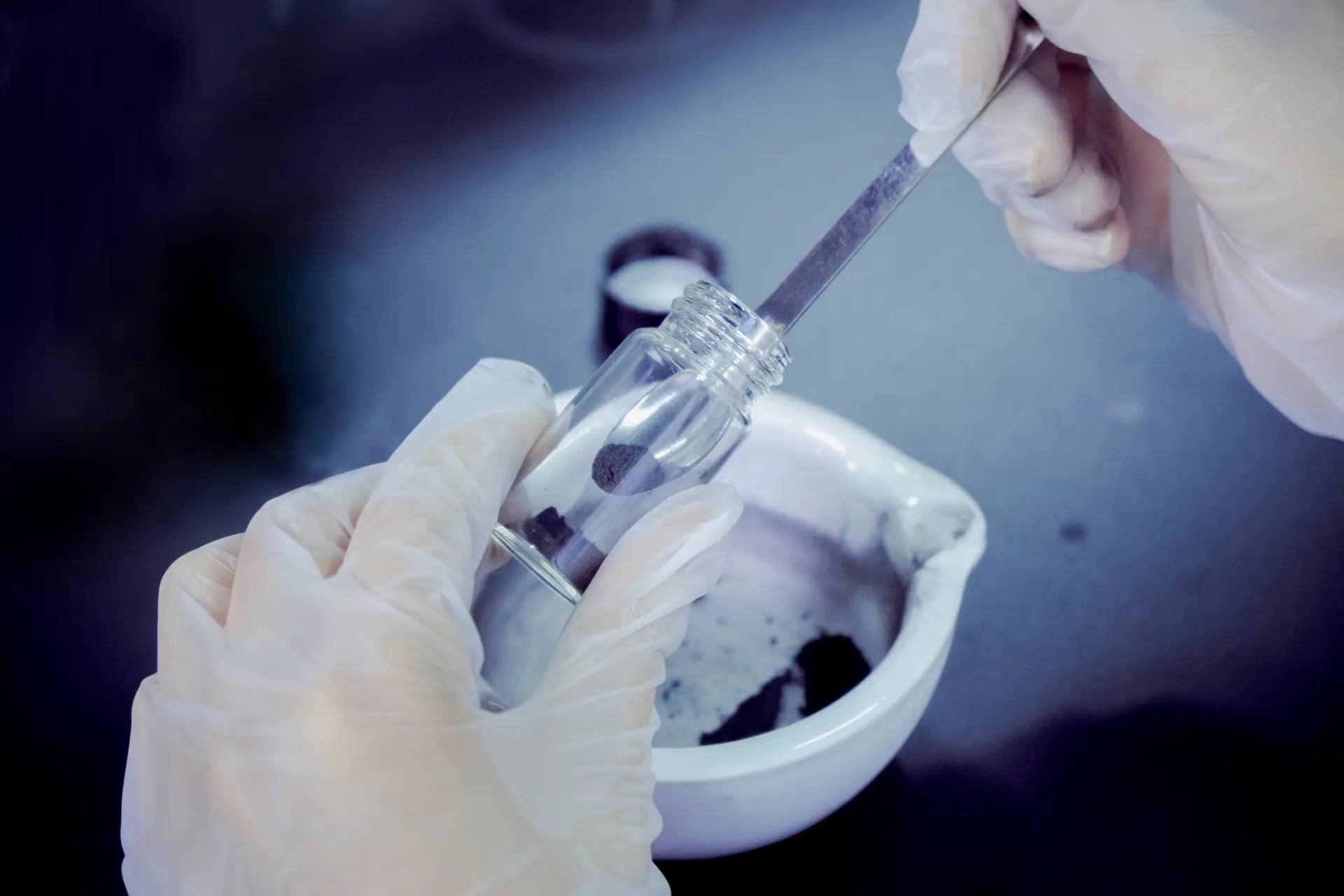
Biological material undergoes proprietary carbon extraction (patented methodology, Patent No. ZL 201010565778.9). Organic impurities are removed; elemental carbon is isolated and purified to 99.95%+; the result is converted to graphite — the crystalline precursor required for diamond synthesis. Hair and fur typically contain 30-40% carbon by mass, which is why the minimum sample is 6 grams and the recommended range is 10-20 grams. See the complete hair-to-diamond process for stage-by-stage detail.
Step 2 — HPHT synthesis (10-15 days)
The graphite assembly is loaded into a six-sided anvil press growth chamber and held at approximately 5.5 GPa and 1,450°C. Carbon atoms migrate into diamond lattice structure — the same physical mechanism that builds natural diamonds in the mantle, run on a laboratory timescale. The full synthesis engineering is documented on our technology page.
Step 3 — Cutting and polishing (10-15 days)
Standard production is round brilliant Ideal cut. Optional shapes — Cushion, Emerald, Oval, Pear, Heart — are available at comparable cutting cost, though production scheduling may vary. All cutting is performed at our manufacturing facility.
Step 4 — Grading and certification (3-5 days)
Every stone is graded and certified to the same standard: E-H color (we do not produce fancy colors), VVS-SI clarity, Ideal cut. Default certification is CCIC or ILDA; IGI and GIA upgrades are available for partners whose end customers expect those names.
Total standard cycle
60 days from approved sample to finished stone. Rush service is not offered, in any segment, at any price — crystal growth physics does not negotiate.
The point for partners: a milestone diamond carries the same manufacturing substance as a memorial diamond. It is not a novelty product, not a lower tier, and not a brand extension that requires separate supplier qualification.
Production Evidence: Three Cases
Case A — Baby Hair Diamond (Custom Below-Spec Order)
A Beijing family commissioned a diamond from their daughter's first-hair clippings from the traditional 100-day haircut ceremony. Fine infant hair carries less carbon per gram than adult hair, and the available sample was limited to 4.2 grams — below the standard 6-gram planning minimum.
The laboratory evaluated the sample individually, applied the patented extraction protocol, and produced a 0.18-carat stone. Timeline extended to 72 days versus the standard 60, reflecting the additional purification passes required for the fine-hair input and the small batch size. Full production documentation is on the baby-hair diamond case page.
Read this case correctly
It demonstrates flexibility, not a product tier. The 0.5-carat minimum standard SKU remains the commercial default; sub-spec custom orders are assessed case by case and quoted individually.
Case B — Peony Diamond (Botanical Carbon, 3.0 ct)
A 50-year-old Luoyang Red peony — the city flower of Luoyang — was converted into a 3.0-carat diamond, the first botanical-carbon diamond in our production history. The case received coverage from 30+ national and international media outlets and established two facts that matter commercially: plant carbon reaches full gemological quality (E-H, VVS-SI after grading), and botanical origin stories generate press attention that hair-based cases rarely do. Full documentation is on the peony diamond case page.
Botanical milestone orders — anniversary flowers, wedding bouquets, heritage trees — follow the same 60-day cycle. Plant fiber minimums are higher than hair (15 grams minimum, 30-50 grams recommended) because of variable carbon density across species.
Case C — Hakka Ancestral Root Diamond (5.33 ct, Emerald Cut)
A cypress tree root from a historic Hakka settlement was selected as the carbon source for a 5.33-carat emerald-cut diamond, created for the 33rd World Hakka Conference and presented there as a permanent cultural artifact. The framing throughout was heritage, roots, and continuity — no memorial language appeared in the commission at any stage. Production documentation, including the lignin-and-cellulose breakdown of the root material, is on the Hakka ancestral root diamond case page.
This is the pattern we want partners to notice: when the carbon source is a heritage object rather than a body, the customer's mental model shifts from "preservation" to "provenance." Provenance-based framing supports higher price points and opens design directions — emerald cuts, engraved origin documentation, multi-stone settings — that grief-framed purchases often avoid. It also demonstrates a second commercial capability: institutional and cultural commissions, where the buyer is an organization rather than an individual.
Why Partners Should Take This Segment Seriously
- The economics repeat. A memorial purchase happens once per loss. A family that buys a first-hair diamond returns for the sibling's stone, the anniversary stone, the grandparent's legacy stone. Same customers, multiple orders, same supply chain.
- Marketing constraints disappear. Memorial marketing is sensitive to channel, tone, and timing. Milestone marketing is ordinary premium gift marketing — bridal publications, parenting media, anniversary content. Partners can run the full channel mix without grief-appropriateness review.
- The supply chain is already built. No new equipment, no new certifications, no new QC. The only new asset is the sales narrative.
- Family-set orders raise average order value. One carbon extraction, multiple finished stones, one logistics chain. For partners, the family-set structure converts a single 1-carat order into a two- or three-stone order without additional customer acquisition cost.
- The competitive field is empty. Memorial diamond manufacturing is contested. Milestone-specific manufacturing is not — a handful of brands market celebration diamonds, but none with disclosed production infrastructure, published case evidence, and third-party traceability. The first B2B supplier to own this category narrative takes it.
The Rules That Do Not Change
Milestone framing relaxes the marketing, not the discipline. Five policies carry over unchanged, and partners should present them to end customers unchanged:
- No cremated ashes — ever. The physics is identical for every occasion: standard cremation fully volatilizes organic carbon. Residual ash is calcium compounds with insufficient carbon for synthesis. This is a permanent policy, not a service limitation. See our FAQ and sample-requirements analysis for the full chemistry.
- No colored diamonds. E-H colorless and near-colorless only. Fancy colors (blue, yellow, pink, green, black) require dopant processes outside our commercial product range. Do not accept milestone orders predicated on a color we do not produce.
- No rush orders. 60 days standard. The baby-hair case at 72 days shows what exceptional inputs do to the timeline; nothing compresses it.
- Sample minimums are planning numbers, not guarantees. 6 grams of hair, 10 grams of feathers, 15 grams of plant fiber, 10 grams of keratin solids. Fine or low-carbon-density samples may be workable below minimum — but only after laboratory evaluation, and with timeline implications.
- Certificates stay third-party. CCIC/ILDA default; IGI/GIA upgrades available. No certificate carries partner branding; white-label applies to packaging and inserts only. Traceability runs through the ILDA third-party lookup, stone by stone.
One addition partners can offer in this segment that memorial rarely uses: the family set — one approved sample grown into multiple stones. The extraction runs once; each stone carries its own grading and its own traceability code. For milestone customers, this is the difference between "a diamond" and "our family's diamond."
What Partners Ask Us About Milestone Diamonds (FAQ)
Can a diamond really be made from a living person's hair?
Yes. The process requires keratin or plant carbon, not a deceased source. Hair clipped yesterday produces the same 99.95%+ purified carbon as any other sample. A growing share of our production inquiries now involves living sources.
Which milestone occasions convert best?
First hair and birth keepsakes lead by volume. Anniversaries follow — especially wedding-flower conversions, where the botanical story does the selling. Coming-of-age and living-legacy commissions are smaller but carry the highest per-order value.
Is a baby's fine hair enough material?
Plan for the standard minimum of 6 grams and collect 10 grams or more wherever possible — fine infant hair packs less carbon per gram than adult hair. If the available sample is smaller, contact the laboratory before promising a delivery date; sub-minimum samples are assessed individually and may require an extended timeline. A 4.2-gram first-hair sample has been converted successfully, but that case ran 72 days rather than 60.
Can one sample become diamonds for the whole family?
Yes. This is the family-set structure: one extraction run from one approved sample, grown into multiple stones, each independently graded and independently traceable. It is the strongest offer in the milestone segment — three siblings receiving identical-origin stones from a parent's or grandparent's hair outperforms any single-stone pitch we have seen.
Do milestone diamonds carry the same certificates as memorial diamonds?
Identical. CCIC or ILDA certification is included by default; IGI and GIA upgrades are available with the same lead-time additions. Certificates are issued in the laboratory's standard format and never carry partner branding — the stone does not know the occasion, and neither does the grading laboratory.
Is the quality specification different — color, clarity, cut?
No. Every stone, every segment: E-H color, VVS-SI clarity, Ideal cut as standard, with Cushion / Emerald / Oval / Pear / Heart options. Fancy colors are not produced in any segment.
What sources are excluded?
Cremated ashes in all forms and for all occasions — standard cremation destroys the organic carbon diamond synthesis requires. Accepted sources: human hair, pet fur, feathers, plant fibers, and solid keratin such as nails. The exclusion list does not change with the emotional context.
Conclusion
The memorial diamond supply chain was engineered for one emotional moment: loss. But the infrastructure — carbon extraction, HPHT synthesis, grading, certification, white-label delivery — serves the entire emotional lifecycle of a family. Birth, coming of age, marriage, anniversary, legacy. Each occasion generates carbon-rich material; each material becomes a certified stone on the same 60-day line.
The partners who win this segment will not be the ones who understand diamond physics best. They will be the ones who understand that a family celebrating its first child and a family mourning its dog are buying the same manufacturing capability — and that the celebrating family buys more often, with fewer marketing restrictions and higher repeat potential. The evolution of this broader category is something we have written about before: memorial diamonds were never the end state of the technology, only its first commercial expression.
The entry point is the same as every BioGem Lab partnership: execute the mutual NDA, review the B2B Partner Pack, and place a trial order — the full operational path is mapped in our NDA-to-delivery walkthrough. One stone is enough to validate the workflow — from any source, for any occasion. Start via the contact page or partnership programs.
Li Lihua — Chief Scientist
Patent inventor ZL 201010565778.9. View profile →
Start Your Milestone Diamond Partnership
Request a free OEM consultation — we reply within 24 hours. White-label HPHT production for memorial and milestone diamond brands. ~60-day standard turnaround.
Related Articles
Plant-Source Memorial Diamonds: From Petals to Heartwood
How botanical carbon — peonies, banyan aerial roots, antique camphor heartwood — becomes a certified diamond, with production cases and sample requirements.
Evolution of Memorial Technologies: From Urns to Crystals
An industry analysis tracing memorial technologies from ancient containment to molecular transformation — and why diamonds were only the first commercial expression.
NDA to Delivery: Inside a Memorial Diamond B2B Partnership
An end-to-end operational map of a memorial diamond B2B partnership — NDA, samples, HPHT production, white-label certification, and insured delivery.